
Laser Interferometry
Laser Interferometry Topics and Sections
1. Metrology
Metrology is the science of measurement, ensuring accuracy and consistency across various fields. It includes three main areas: scientific metrology (developing measurement standards), industrial metrology (ensuring accurate measurements in manufacturing and engineering), and legal metrology (regulating measurements for trade and safety).
Metrology is essential for quality control, technological development, and international trade. It relies on standard units like the International System of Units (SI) to maintain global consistency. Precision instruments, such as laser interferometers and atomic clocks, improve measurement accuracy. Metrology plays a crucial role in fields like aerospace, healthcare, and nanotechnology. Without it, reliable scientific research and industrial production would be impossible.
2. Interferometry
While Metrology is the broad science of measurement, ensuring accuracy and consistency across all fields, interferometry is a specific measurement technique that uses the interference of waves (typically light, radio, or sound) to measure small differences in distance, shape, or material properties.
It works by combining waves from two or more sources to create an interference pattern, which reveals precise information about the object being studied. This method is widely used in astronomy, physics, and engineering. In astronomy, radio interferometry allows multiple telescopes to work together as a single, much larger telescope, improving resolution.
In metrology, laser interferometers measure tiny displacements, surface irregularities, or refractive index changes. Optical interferometry is used in fiber optics, medical imaging, and holography. Gravitational wave detectors like LIGO use interferometry to detect minuscule ripples in spacetime. The technique’s precision makes it indispensable for high-resolution measurements across many scientific fields.
3. Types of Interferometry
Interferometry is a technique that uses the interference of waves (typically light, radio, or sound) to make precise measurements. There are several types of interferometry, classified based on their applications and wave properties. Here are the main types:
A) Laser-Based Interferometry
Michelson Interferometry – One type of laser interferometer for mostly measuring small distances, optical path differences, and wavelength properties.
Fabry-Pérot Interferometry – Uses multiple reflections between two closely spaced mirrors to create high-resolution spectral analysis.
Mach-Zehnder Interferometry – Often used in fluid dynamics and quantum mechanics to study phase shifts in light beams.
Sagnac Interferometry – Used in ring laser gyroscopes for rotation sensing, commonly found in navigation systems.
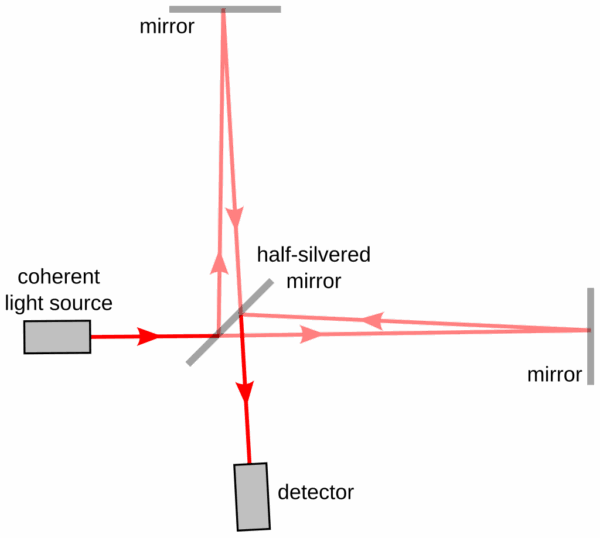
Author: Stannered. Unedited Image.
B) Radio Interferometry
Very Long Baseline Interferometry (VLBI) – Uses widely separated radio telescopes to simulate a giant telescope, improving resolution.
Aperture Synthesis Interferometry – Combines signals from multiple antennas to create a high-resolution image (used in arrays like ALMA and the VLA).
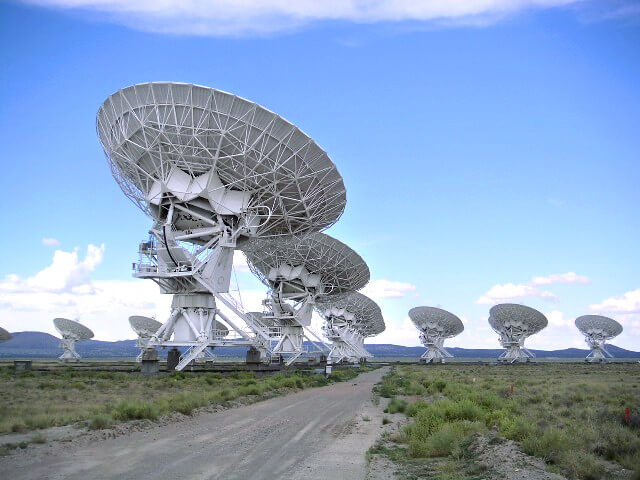
Author: Hajor. Unedited Image.
C) Acoustic Interferometry
Used in sonar and underwater studies to analyze sound wave propagation and fluid properties.
D) X-ray and Neutron Interferometry
X-ray Interferometry – Uses X-rays to study atomic structures and surfaces at a very fine scale.
Neutron Interferometry – Utilized in quantum mechanics and material science to probe atomic interactions.
E) Quantum Interferometry
Explores quantum mechanics principles, such as superposition and entanglement, often used in quantum computing and precision measurements.
4. Homodyne vs. Heterodyne Interferometry
The market leaders in laser interferometry typically use either a Homodyne or a Heterodyne interferometry technique. Here are the differences in approach, and the benefits of using one approach over the other.
A) The Homodyne interferometry approach measures displacement by counting interference fringes directly.

Resolution & Accuracy: This allows ultra-high precision in the sub-nm to picometer range. This high accuracy is due to precision frequency stabilization and specialized optics.
Environmental Compensation: To stabilize measurement for lab or industrial measurement, sophisticated sensors for temperature, pressure, humidity and vibration are often used.
Measurement Configurations: To maximize accuracy for linear, angular and multi-axis measurements a variety of optics configurations are often used. This allows for customized set-ups for specialized laboratory scenarios and complex experiments.
Laser Stability & Coherence: Lasers are typically optimized for laboratory conditions – which results in very long coherence length with low drift.
B) The Heterodyne interferometry approach modulates two polarized laser beams to create a beat frequency, which reduces sensitivity to intensity fluctuations and environmental noise.
Resolution & Accuracy: This method of interferometry usually provides nanometer to sub-micrometer resolution which is optimized for many industrial applications rather than laboratory applications.
Environmental Compensation: Typically optimized for robustness in more variable industrial shop-floor conditions.
Measurement Configurations: Often configured for calibrating primarily linear axes such as in CNC machines.
Laser Stability & Coherence: Lasers are typically optimized to balance coherence length and beam stability for ensuring reliable performance in industrial field conditions.
In general Homodyne-based laser interferometers are typically best suited for sub-nm precision applications in laboratory-like environments where exact environments are maintained.
And Heterodyne-based laser interferometers are typically best suited for more industrial applications where less precision and measurement specialization are not necessary.
5. Interferometry Technical Challenges
A) Overcoming Abbe Error
Abbe error, also known as Abbe offset or sine error, occurs in interferometry and precision measurements when there’s a misalignment between the measurement axis and the displacement axis. Named after Ernst Abbe, this error arises when the measuring sensor is offset from the line of motion, causing angular deviations to introduce measurement inaccuracies. In interferometry, even small angular displacements can lead to significant errors if the measurement point is not aligned with the motion axis. This is particularly critical in systems where high precision is required, such as in optical testing or nanometrology. To minimize Abbe error, designs aim to align the reference and measurement axes as closely as possible.
In interferometry, precise length measurement poses a particular challenge if the measuring reflector cannot be positioned in alignment with the axis of movement. This misalignment leads to the Abbe error which can significantly affect the measurement uncertainty.
It is generally not geometrically possible to place the measuring axis of the interferometer directly in the drive axis of the guide to be measured. The distance between the drive axis and the measuring axis in conjunction with the tilt of the reflector therefore leads to a measurement deviation, which can be very large under certain circumstances and often remains unknown.
Using three-beam laser interferometer, it is possible to mathematically compensate for the Abbe error. Three-beam technology enables the simultaneous acquisition of length and angle values with maximum precision. This allows the measurement deviations caused by the Abbe offset to be massively reduced.

B) Overcoming an Alignment Error
In addition to the Abbe error, the second geometric error that occurs during measurement is an alignment error. This is length-dependent and is specified as a relative value μm/m. At the same time, however, it is difficult to detect, especially with short measuring distances.
Errors can occur with a purely visual alignment of a laser beam. If the beam on the measuring mirror shifts by 0.5 mm from the beginning to the end of the measuring distance, an error of 0.5 μm/m results at a distance of 500 mm. If the same displacement is observed at 50 mm, the error is linearly greater and very high at 50 μm/m.
Using a three-beam laser interferometer offers a solution for the alignment error, as some three-beam laser systems have an integrated alignment aid that facilitates the fine adjustment of the laser beam. Together with the correct software, it can be shown whether the measuring axis corresponds to the direction of movement, so that this error influence becomes negligible.
C) Measuring Difficult Dynamic Applications
Measurements in dynamic applications often require lightweight measuring equipment so that the movements are not influenced by the weight of the equipment. This applies in particular to fast, complex movements, such as those that occur in research and in industrial production.
One method of effectively using an interferometer for these types of measurements, is to use a lightweight reflector (~25 g) with a three-beam laser interferometer. The lightweight reflector minimizes the mass inertia and thus enables fast and precise measurements even with highly dynamic movements.
Using this strategy it is possible to measure precise angle changes even with fast movements of 3 m/s. Large angular measuring ranges up to ±12.5° are possible. A resolution of up to 0.01 μrad is possible, and offers an extremely fine detection of the smallest angle changes.
D) Using Interferometers in a Vacuum
Measuring in a vacuum eliminates environmental influences on the measurement, which currently represents the limit of the minimum achievable measurement uncertainty. Interferometer measurements in a vacuum places special demands on the materials used and on manufacturing cleanliness of the sensors. Materials such as aluminum, stainless steel or Invar ensures stability and reliability in a vacuum. Sensor-head construction must be designed in such a way that air inclusions in the sensor are avoided and a low outgassing of the materials can be achieved.
Another challenge is the handling of the sensor when it is inserted into the vacuum chamber. Preferably the sensor can be separated from the feedthrough during servicing, thus minimizing the installation effort.
Specially adapted interferometers for vacuum applications up to 1 × 10⁻⁷ mbar with these features are available.
6. Laser Interferometer Applications
A) Semiconductor Industry
Wafer Inspection
In semiconductor manufacturing, wafer inspection is a critical process to ensure that the wafers used for integrated circuits (ICs) are free from defects and meet strict dimensional tolerances. Laser interferometers play a crucial role in this process by providing high-precision, non-contact measurements.
Semiconductor wafers must have uniform thickness and a highly flat surface to ensure consistent IC performance. Variations in wafer thickness can cause issues during photolithography and etching processes.
A dual-wavelength laser interferometer is often used to measure wafer thickness variations with sub-nanometer precision. By placing the wafer between two parallel reference surfaces, the optical path difference due to wafer thickness is measured using interferometric principles. Phase-shifting interferometry (PSI) can be employed for enhanced resolution.
For wafer surface defect inspection, a laser interferometer can help detect defects like scratches, pits, or contamination can impact semiconductor performance. Coherence scanning interferometry (CSI) is used to detect surface defects by scanning the wafer with a laser beam and analyzing reflected interference patterns.
Holographic interferometry is another method that can highlight defects by comparing an ideal reference wavefront with the actual wafer’s reflected wavefront.
To detect stress and strain in wafers (which can lead to cracks, warping, or device failure during processing) laser interferometers can be used to measure stress-induced deformations on a wafer surface. Holographic interferometry allows real-time observation of stress distribution across the wafer.
Laser interferometers are indispensable tools in semiconductor manufacturing for ensuring wafer quality, defect detection, and precise alignment. By leveraging interference-based optical measurements, manufacturers can achieve sub-nanometer accuracy, which is critical for high-density IC fabrication.

Lithography Stage Positioning
In semiconductor manufacturing, lithography stage positioning is one of the most critical processes, as it determines the accuracy with which circuit patterns are transferred onto silicon wafers. The lithography stage moves the wafer precisely under the photomask or reticle, ensuring that each layer of the integrated circuit (IC) aligns perfectly. A laser interferometer is used in this process to provide real-time, nanometer-level positioning accuracy, ensuring that wafer alignment and exposure steps are executed with extreme precision.
The laser interferometer functions by directing a highly coherent laser beam towards a moving mirror or reflective target attached to the lithography stage. The beam is split into a reference beam and a measurement beam, with the latter reflecting off the moving stage. As the stage moves, the phase difference between these beams changes, generating interference patterns that are analyzed to determine exact displacement, velocity, and position. Modern lithography tools, such as those used in extreme ultraviolet (EUV) lithography, require accuracy on the order of sub-nanometers, which is only possible with laser interferometry.
To compensate for environmental factors such as temperature fluctuations, air pressure variations, and vibrations, multi-axis interferometry systems are used. These systems employ multiple laser beams along different axes (X, Y, and sometimes Z) to track motion in all directions. Advanced feedback control loops continuously adjust the stage’s position based on real-time interferometer data, ensuring that any deviations are corrected instantaneously. This level of precision is crucial in maintaining overlay accuracy—ensuring that each lithography layer aligns perfectly with the previous layers to prevent defects in the final chip.
Additionally, some lithography systems use vacuum environments to eliminate air turbulence, further enhancing the accuracy of laser interferometer measurements. In high-end semiconductor fabrication facilities, interferometer-based stage positioning systems work in conjunction with advanced motion controllers and piezoelectric actuators to achieve ultra-precise movements. Without laser interferometers, maintaining the precision required for sub-5nm node semiconductor manufacturing would be virtually impossible, leading to lower yields and higher defect rates.
By enabling high-speed, ultra-precise, and repeatable positioning, laser interferometry plays a vital role in ensuring the continued advancement of semiconductor technology. As chip designs become even more complex, with increasingly smaller transistors and denser circuits, the demand for even more precise interferometric measurement systems will only grow, pushing the limits of metrology and stage control in future semiconductor manufacturing.
Mask Alignment
In semiconductor manufacturing, mask alignment is a crucial step in the photolithography process, ensuring that each pattern layer is precisely aligned with the previous layers on a silicon wafer. Any misalignment can lead to defects, reducing chip yield and performance. Laser interferometers play a key role in mask alignment by providing nanometer-level precision in positioning the mask (or reticle) relative to the wafer before exposure. This ensures that the circuit patterns are accurately transferred, layer by layer, onto the wafer.
A laser interferometer-based alignment system works by directing a laser beam toward both the mask and wafer. The system measures the relative displacement between them by analyzing the interference patterns generated by the reflected beams. These interference fringes provide real-time feedback on position, allowing for ultra-precise corrections before the exposure step. Multi-axis interferometers are often used to track motion in multiple directions (X, Y, and rotational alignment), ensuring perfect overlay of the mask patterns with previously printed layers.
To further enhance alignment accuracy, phase-shifting interferometry (PSI) is sometimes used. This technique measures extremely small phase differences in the reflected laser light, enabling sub-nanometer resolution in detecting alignment errors. Additionally, laser interferometry helps compensate for thermal expansion, stage vibrations, and mechanical drift that could otherwise introduce misalignment. Advanced feedback control loops continuously adjust the mask position based on real-time interferometer data, ensuring that any deviations are corrected instantly.
For next-generation semiconductor manufacturing, especially at sub-5nm nodes and EUV lithography, laser interferometers are indispensable. Since these advanced chips require even tighter overlay tolerances, mask alignment must be executed with extreme precision. The use of vacuum environments and active vibration isolation systems alongside laser interferometry further enhances alignment accuracy, reducing potential sources of error.
Overall, laser interferometers enable high-speed, high-precision mask alignment, ensuring that semiconductor fabrication meets the stringent requirements of modern integrated circuits. Without this technology, achieving the necessary alignment accuracy for complex multi-layer semiconductor devices would be significantly more challenging, impacting both performance and production yield.
B) Precision Metrology
Laser interferometers are fundamental tools in precision metrology, providing high-resolution, non-contact measurement of distance, displacement, angles, and surface profiles. Their working principle is based on interference of coherent laser beams, where small changes in optical path length cause measurable shifts in interference fringes. These shifts are analyzed to determine sub-nanometer-level displacements, making laser interferometry a cornerstone of ultra-precise measurement applications in manufacturing, aerospace, nanotechnology, and scientific research.
The core mechanism of a laser interferometer involves splitting a laser beam into two paths: a reference beam and a measurement beam. The reference beam travels a fixed optical path, while the measurement beam reflects off a movable mirror attached to the object being measured. When the two beams recombine, they form an interference pattern that changes based on the optical path difference caused by the object’s movement. The resulting fringe pattern is detected and analyzed to measure displacement with extreme accuracy.
In metrology, laser interferometers are widely used for calibrating length standards, such as gauge blocks, coordinate measuring machines (CMMs), and machine tools. Using heterodyne interferometry, they can measure linear displacement by counting interference fringes, with each fringe corresponding to a displacement of half the laser wavelength. By tracking phase shifts with electronic interpolation techniques, measurements can achieve sub-nanometer resolution.
Modern laser interferometry systems utilize multi-axis interferometers to measure both linear and angular displacements. This is crucial in applications such as machine tool calibration, where errors in multiple directions must be accounted for. Using multiple beams and differential interferometry, these systems can measure pitch, yaw, and roll movements of a mechanical system with nanoradian-level precision. Fabry-Pérot and Michelson interferometer configurations are often employed for high-stability measurements.
One of the challenges in precision metrology is that environmental factors like temperature fluctuations, air pressure variations, and humidity can affect measurement accuracy. To counteract this, laser interferometer systems use environmental compensation units (ECUs), which measure atmospheric conditions in real-time and apply corrections to the interferometric data. Additionally, vacuum environments and thermally stabilized optical systems are used in high-precision applications, such as semiconductor fabrication and nanotechnology research.
Laser interferometers are now integrated into computer-controlled feedback loops in advanced motion control systems, such as those used in semiconductor lithography stages, precision robotics, and nanomanufacturing. These systems enable real-time correction of positioning errors, ensuring that even the smallest deviations are detected and compensated for. The combination of interferometry, digital signal processing, and adaptive optics is driving new levels of precision in industrial and scientific metrology.
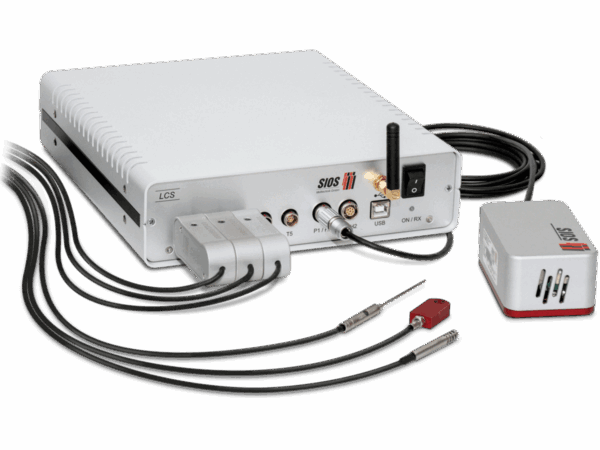
C) Optical Testing
Laser interferometers are essential tools in optical testing, providing ultra-precise measurements of surface quality, wavefront aberrations, and optical component performance. Optical systems, such as lenses, mirrors, and laser optics, must meet stringent quality standards, and interferometry allows for non-contact, high-resolution testing. The principle of interferometric optical testing relies on analyzing interference patterns created when a laser beam interacts with the optical surface under test. These patterns reveal deviations from an ideal optical shape or wavefront.
One of the most common configurations used in optical testing is the Michelson or Fizeau interferometer. In a Fizeau interferometer, a laser beam is split into two paths: one reflects off a reference optic, while the other reflects off the test optic. When these beams recombine, their interference pattern is captured by a detector. Any distortions in the interference fringes indicate surface irregularities or optical defects, allowing for sub-nanometer accuracy in shape and flatness measurements.
For optical systems that manipulate laser beams or light waves, such as telescopes and high-precision lenses, wavefront analysis is critical. Twyman-Green interferometers are used to measure wavefront errors by comparing the test optic’s transmitted wavefront with a reference wavefront. This technique helps identify spherical aberration, coma, astigmatism, and other optical defects that can degrade system performance. Advanced phase-shifting interferometry (PSI) further enhances accuracy by capturing multiple interference patterns and computing phase differences with sub-wavelength precision.
In the manufacturing of precision optics, such as mirrors for space telescopes or laser cavities, surface flatness is crucial. Laser interferometers perform high-precision flatness testing by comparing the test surface to a reference optical flat. Fringe analysis algorithms are used to quantify deviations from a perfectly flat or spherical shape. Zygo-style Fizeau interferometers are widely used for this purpose, capable of measuring deviations on the order of a fraction of a wavelength (λ/10 or better).
In addition to shape testing, laser interferometers are used for coating thickness and thin-film analysis. When light interacts with coated optics, interference occurs between reflections from different layers. By analyzing these interference patterns using spectral or white-light interferometry, precise measurements of film thickness, refractive index variations, and coating uniformity can be obtained. This is crucial for ensuring the performance of anti-reflective coatings, beam splitters, and dielectric mirrors used in high-precision optical systems.
D) Aerospace & Defense
In the manufacturing and assembly of aircraft, spacecraft, and satellites, laser interferometers are used for precision alignment of critical components. For example, in optical payloads for satellites and telescopes, interferometry ensures that mirrors and lenses are positioned within nanometer tolerances. Heterodyne laser interferometers are commonly used in aligning multi-element optical systems, ensuring that all components are correctly placed to prevent image distortion or signal loss. Fizeau interferometers are also used for testing the surface quality of large telescope mirrors and spaceborne optical elements.
Aerospace structures experience extreme vibrational loads during launch, flight, and operation. Laser Doppler interferometry (LDI) is widely used to measure real-time vibration modes in aircraft wings, turbine blades, and spacecraft components. By analyzing interference fringes caused by dynamic motion, engineers can detect resonance frequencies, structural fatigue, and potential failure points. This non-contact measurement technique allows for precise monitoring of thermal expansion effects, material deformation, and aerodynamic stresses in wind tunnel testing and in-flight diagnostics.
Laser interferometers play a crucial role in inertial navigation systems (INS) used in aircraft, submarines, and guided missiles. Ring laser gyroscopes (RLGs) and fiber optic gyroscopes (FOGs) rely on interferometric principles to detect rotational motion with extreme sensitivity. These systems operate by measuring the Sagnac effect, where a laser beam split into two counter-propagating paths experiences a phase shift proportional to rotational velocity. This enables precise navigation even in GPS-denied environments, ensuring accurate trajectory correction in long-range defense applications.
In space missions and high-speed aircraft, materials undergo extreme thermal fluctuations, which can cause expansion and contraction. Laser interferometers are used to measure thermal expansion coefficients of aerospace materials with nanometer precision. White-light and phase-shifting interferometry (PSI) techniques help detect micro-scale deformations in composite materials, ensuring that structural components can withstand harsh environmental conditions. These tests are critical for the development of lightweight, high-strength aerospace materials used in next-generation aircraft and space vehicles.
E) Manufacturing & Quality Control
One of the primary applications of laser interferometers in manufacturing is dimensional metrology, where they are used to measure lengths, thicknesses, and geometric tolerances of components. Heterodyne laser interferometers provide real-time displacement measurements, enabling in-line quality control in production lines. By integrating interferometric measurement systems into coordinate measuring machines (CMMs) and robotic inspection stations, manufacturers can verify part dimensions with sub-nanometer accuracy, reducing errors in machining and assembly processes.
High-precision machining requires accurate positioning and motion control of machine tools. Laser interferometers are used to calibrate CNC machines, lathes, and milling machines, ensuring that linear, angular, and straightness errors are minimized. Multi-axis laser interferometers track machine movement along X, Y, and Z axes, compensating for misalignment and thermal expansion effects. This improves machining accuracy, reduces material waste, and enhances the longevity of machine tools by maintaining optimal operating conditions.
In industries such as optics, automotive, and aerospace, ensuring smooth and defect-free surfaces is crucial. Phase-shifting interferometry (PSI) and white-light interferometry (WLI) are used to inspect surface roughness and micro-scale defects on machined parts, optical components, and semiconductor wafers. By analyzing interference fringes, these systems detect surface variations at the nanometer level, ensuring that products meet stringent surface quality standards. This is especially important in high-precision optical lens manufacturing, turbine blade production, and wafer polishing.
Manufacturers that apply thin films and coatings, such as anti-reflective coatings, semiconductor photoresists, and industrial hard coatings, rely on laser interferometers to ensure uniformity. Spectral and white-light interferometry measure coating thickness by analyzing reflected interference patterns from different material layers. This ensures consistent coating application, improving product durability and performance. Interferometry-based quality control systems are widely used in semiconductor fabrication, display manufacturing (OLED and LCD screens), and automotive painting processes.
Modern manufacturing lines integrate laser interferometry into automated quality control systems, enabling real-time feedback and process adjustments. Interferometric sensors monitor machining and assembly in smart factories, ensuring continuous precision without the need for manual inspection. As manufacturing moves towards Industry 4.0, interferometer-based machine vision and metrology systems play a crucial role in improving production efficiency, reducing defects, and enhancing overall product quality.

F) Biomedical Applications
One of the most significant biomedical applications of laser interferometry is Optical Coherence Tomography (OCT), a non-invasive imaging technique widely used in ophthalmology, dermatology, and cardiology. OCT operates using low-coherence interferometry, where a broadband laser source is split into a reference and sample beam. By analyzing the interference of backscattered light from biological tissues, OCT generates high-resolution, cross-sectional images of internal structures, such as the retina, skin layers, and blood vessels. This allows early diagnosis of conditions like glaucoma, macular degeneration, and cardiovascular diseases.
Laser interferometers are used to measure micro-scale mechanical properties of biological tissues and cells. Heterodyne laser interferometry can detect nanometer-level displacements in biological samples, providing valuable insights into cell motility, tissue elasticity, and mechanobiology. This is critical for studying cancer cell migration, wound healing processes, and tissue engineering, where precise motion tracking is required to understand disease progression and regenerative medicine.
Biomedical device manufacturing, such as stents, prosthetics, and surgical instruments, demands ultra-precise dimensional control and surface quality verification. Laser interferometers are used for non-contact, high-accuracy measurement of medical implants, optical lenses, and microfluidic devices used in lab-on-a-chip diagnostics. Phase-shifting interferometry (PSI) and white-light interferometry (WLI) are commonly employed to ensure that surfaces are free from defects, ensuring the reliability and biocompatibility of medical devices.
Interferometry-based biosensors play a key role in detecting biomolecules, pathogens, and disease markers at ultra-low concentrations. Surface plasmon resonance (SPR) interferometry is widely used in biomedical research and diagnostics to detect protein interactions, DNA hybridization, and viral particles by measuring phase shifts in laser interference patterns. These techniques are fundamental in drug discovery, point-of-care diagnostics, and personalized medicine, where early and precise detection of biomarkers is essential.
G) 3D Imaging
One of the most common applications of laser interferometry in 3D imaging is white-light and phase-shifting interferometry (WLI & PSI) for surface topography measurement. These techniques are widely used in microelectronics, precision optics, and nanotechnology, where surfaces must be measured at sub-micron accuracy. A laser interferometer scans an object’s surface and records interference fringes, which are then converted into a 3D height map with nanometer precision. This is crucial for quality control in semiconductor wafers, precision lens manufacturing, and microelectromechanical systems (MEMS).
In biomedical imaging and industrial metrology, holographic interferometry and Optical Coherence Tomography (OCT) are used to capture detailed 3D structures. Holographic interferometry creates high-resolution 3D reconstructions of objects by analyzing phase shifts in laser light. OCT, on the other hand, employs low-coherence interferometry to obtain cross-sectional images of biological tissues, making it indispensable for ophthalmology, dermatology, and material analysis. Both techniques allow for real-time, non-contact 3D imaging with exceptional depth resolution.
Laser interferometry is also used in high-precision 3D scanning, particularly in applications where structured light or laser triangulation may not offer sufficient accuracy. Interferometric 3D scanning techniques measure phase shifts in laser beams reflected from an object, generating precise geometric reconstructions. This is widely applied in aerospace, automotive, and forensic industries, where highly accurate 3D models of components or forensic evidence are required. Interferometric structured light projection further improves depth resolution, enabling the scanning of complex shapes and highly reflective surfaces.
For large-scale 3D metrology, laser interferometers are integrated into coordinate measuring machines (CMMs) and robotic inspection systems to verify the accuracy of manufactured parts. In industries such as automotive, aerospace, and civil engineering, absolute distance interferometry (ADI) allows for precise 3D measurement of large structures, including aircraft fuselages, turbine blades, and bridges. By using multi-wavelength interferometry, these systems can compensate for environmental disturbances such as temperature fluctuations and vibrations, ensuring high-accuracy 3D imaging in industrial settings.
Want to learn more?
Address
1 Cabot Road, Suite 210 Hudson, MA 01749
Call Us
1-508-634-6688